

Noction IRP
Discover the world's leading BGP Automation Platform
Optimize Inbound, Outbound, and Transiting traffic routing, detect and mitigate DDoS attacks in real-time, control bandwidth utilization, gain deeper network visibility, and unlock advanced network traffic engineering capabilities.

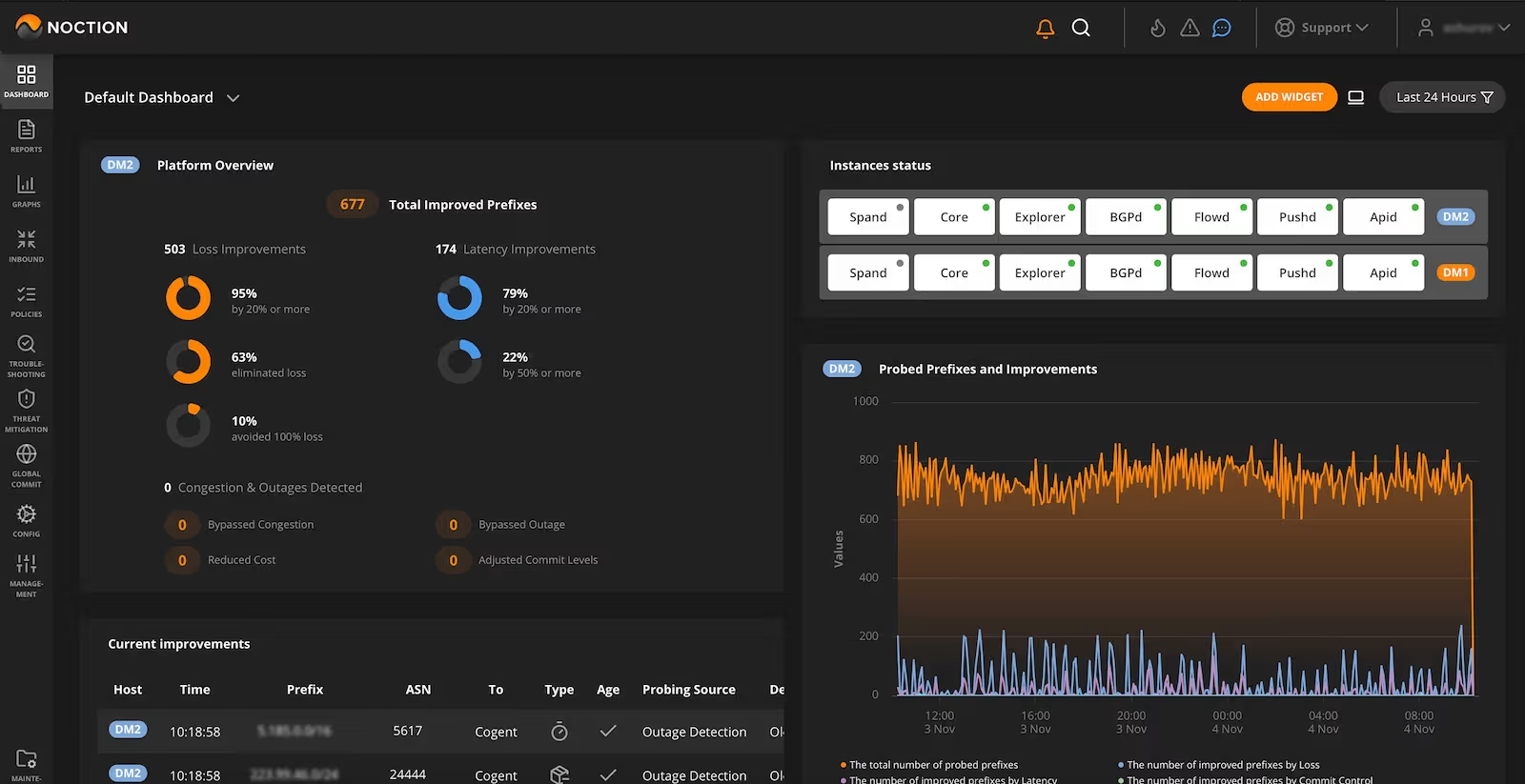
Optimize BGP Routing
Enable objective, automated BGP routing optimization across the board for inbound, outbound, and transiting traffic. Noction IRP intelligently determines which traffic flows require rerouting, thoroughly evaluates alternative network paths in real-time, and applies the most effective improvements with precision and speed.
Automate BGP Network Management
Reduce engineering time and the risk of human errors by automating the BGP management process. Dynamically tune routing paths via the standard BGP routing protocol to provide a scalable mechanism for obtaining your business objectives.
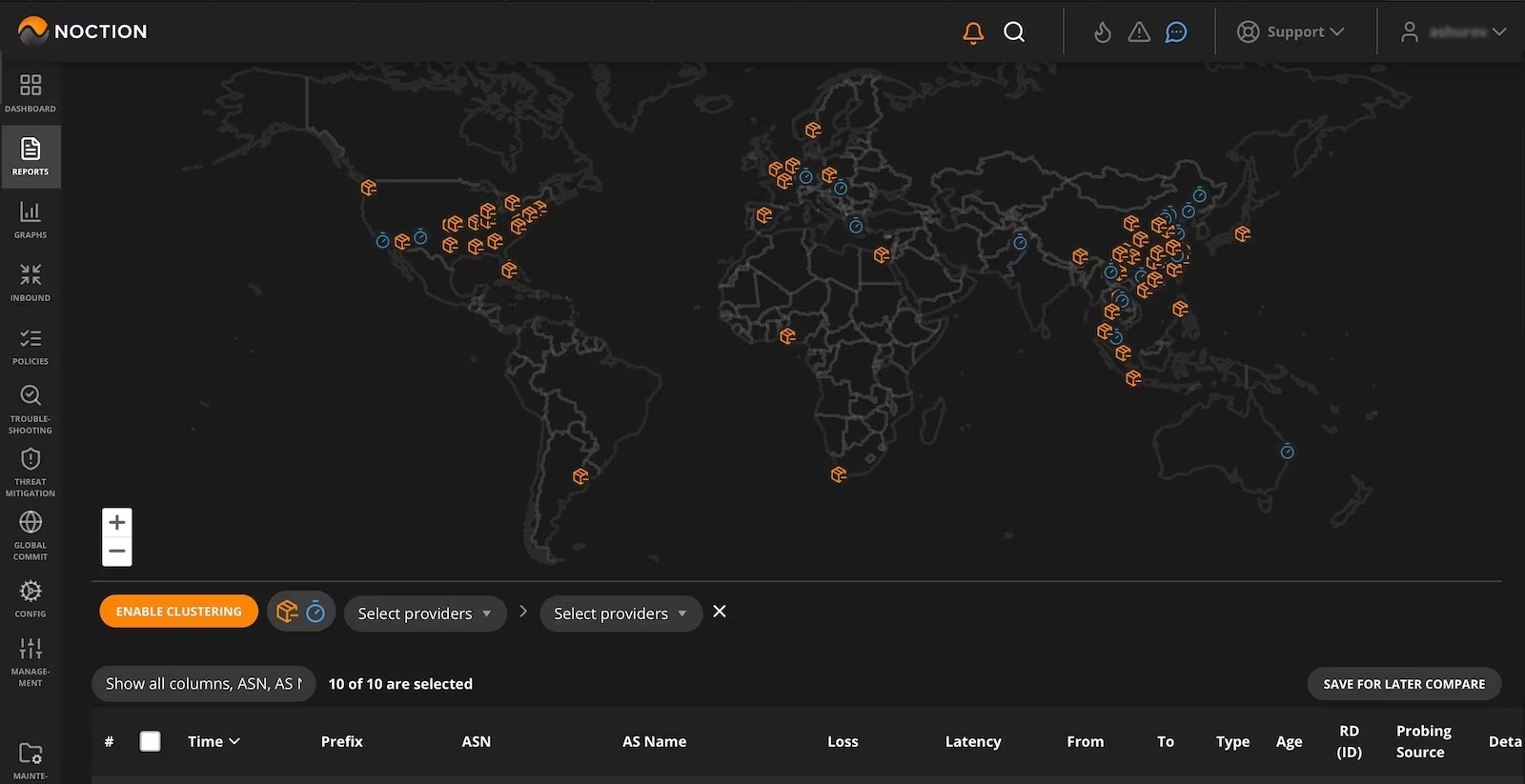
Automate BGP Network Management
Reduce engineering time and the risk of human errors by automating the BGP management process. Dynamically tune routing paths via the standard BGP routing protocol to provide a scalable mechanism for obtaining your business objectives.
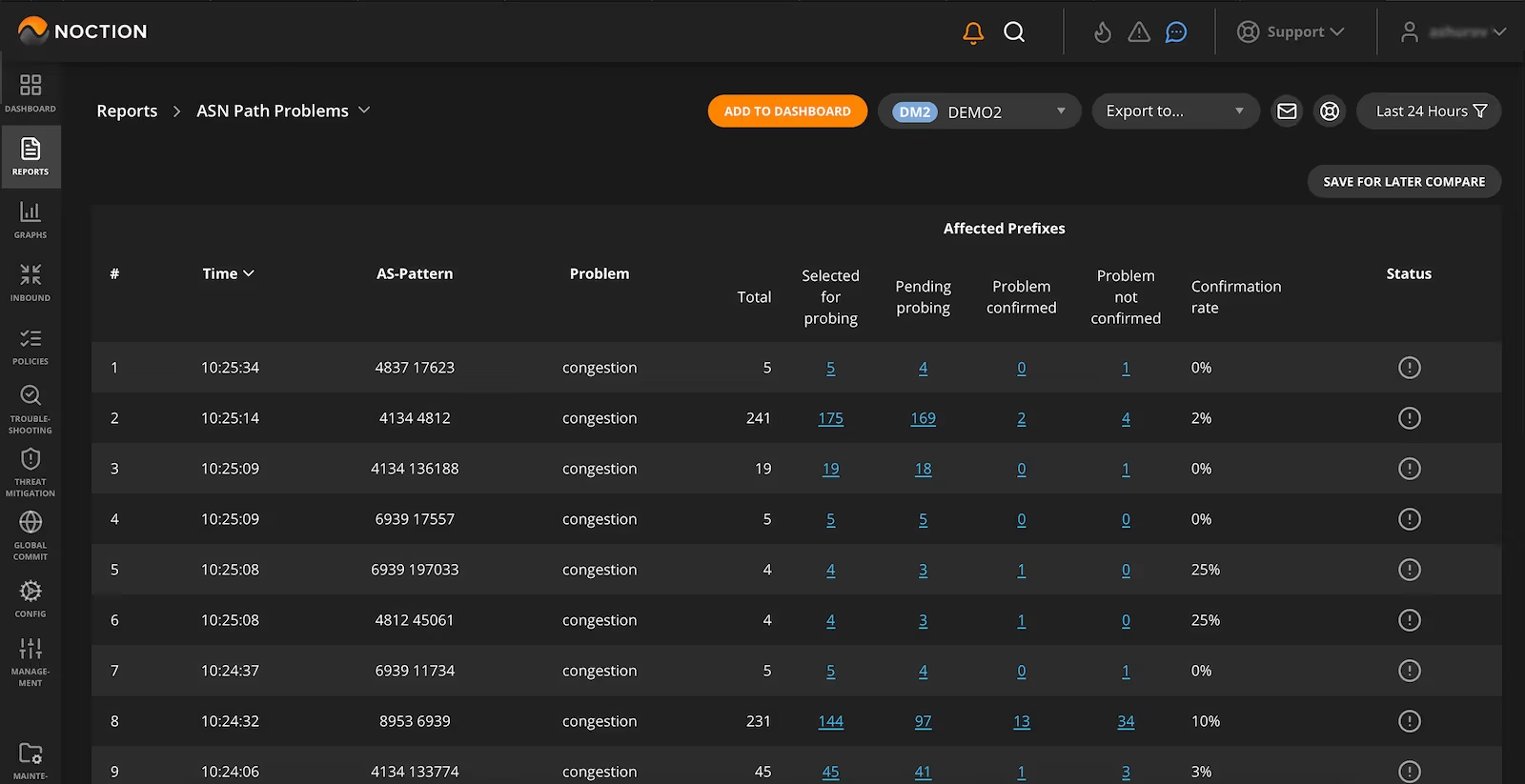
Bypass Congestion and Outages
IRP detects network congestion and outages in real time, ensuring immediate action is taken. It reroutes traffic through the best paths, solving the Internet’s persistent “first and middle-mile” issues.
Minimize Loss and Latency
Noction IRP analyzes latency and packet loss in real time, automatically selects the best transit providers, and helps you achieve, on average, over 40% lower packet latency and more than 90% reduction in packet loss for faster, more reliable network performance.
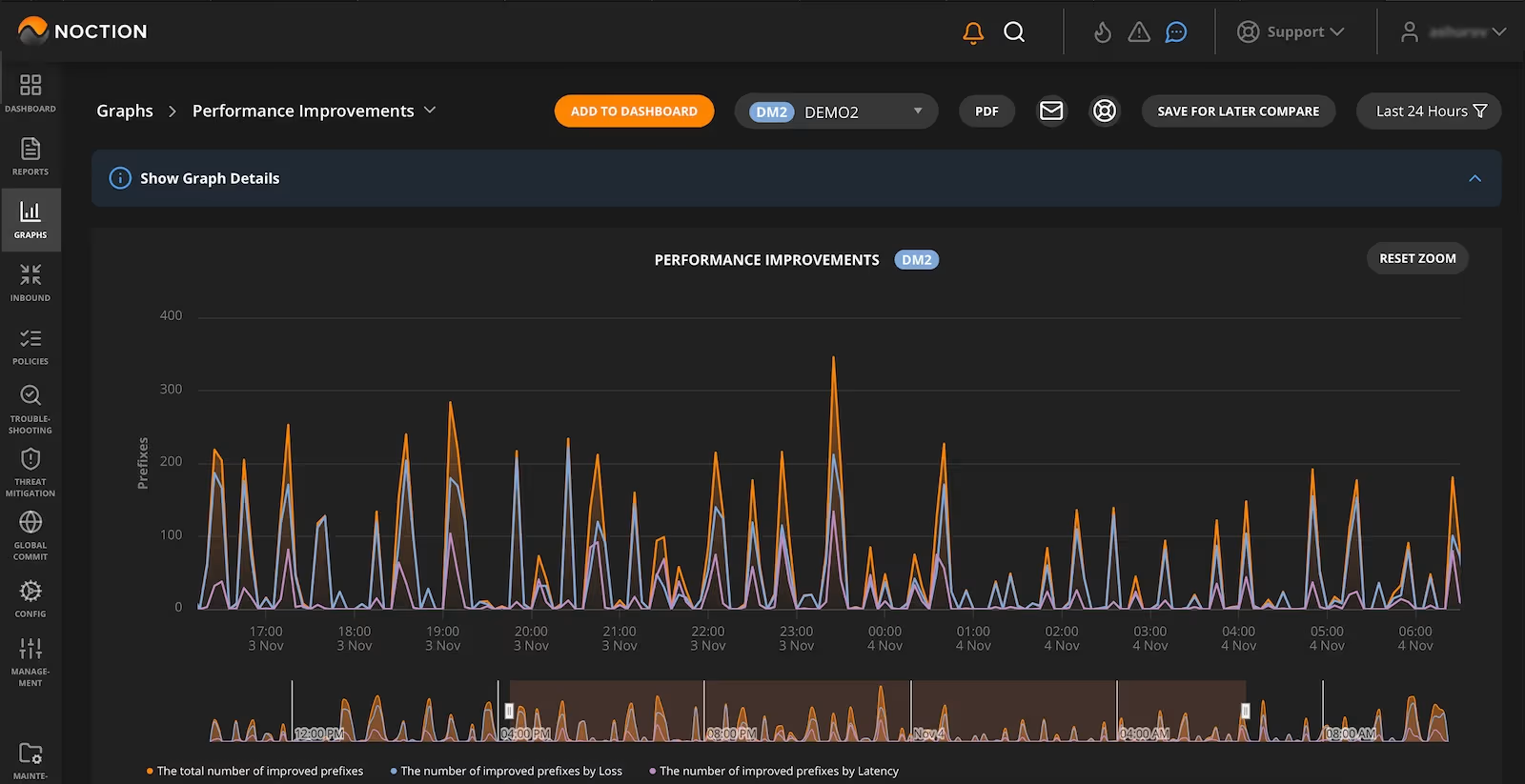
Minimize Loss and Latency
Noction IRP analyzes latency and packet loss in real time, automatically selects the best transit providers, and helps you achieve, on average, over 40% lower packet latency and more than 90% reduction in packet loss for faster, more reliable network performance.
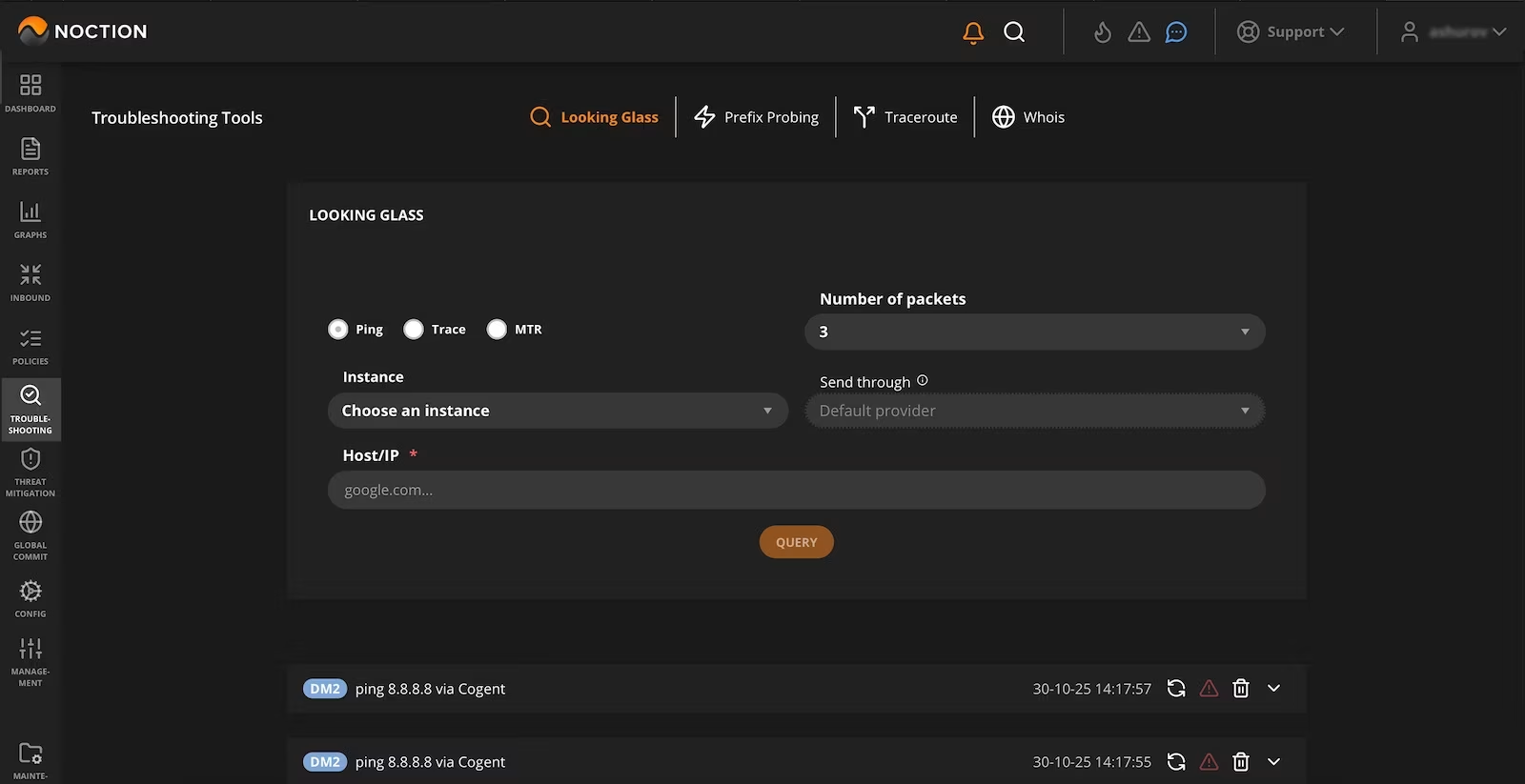
Troubleshoot with Ease
IRP makes troubleshooting a much faster process, detecting, diagnosing, and resolving network issues. The platform offers real-time performance data and alerts users, sending out notifications when necessary.
Control Bandwidth Costs
Balance network traffic and keep bandwidth levels below the preset thresholds for all your providers at all times. Noction IRP monitors bandwidth levels for both outbound and inbound routes and automatically adjusts traffic distribution to the shape you need.
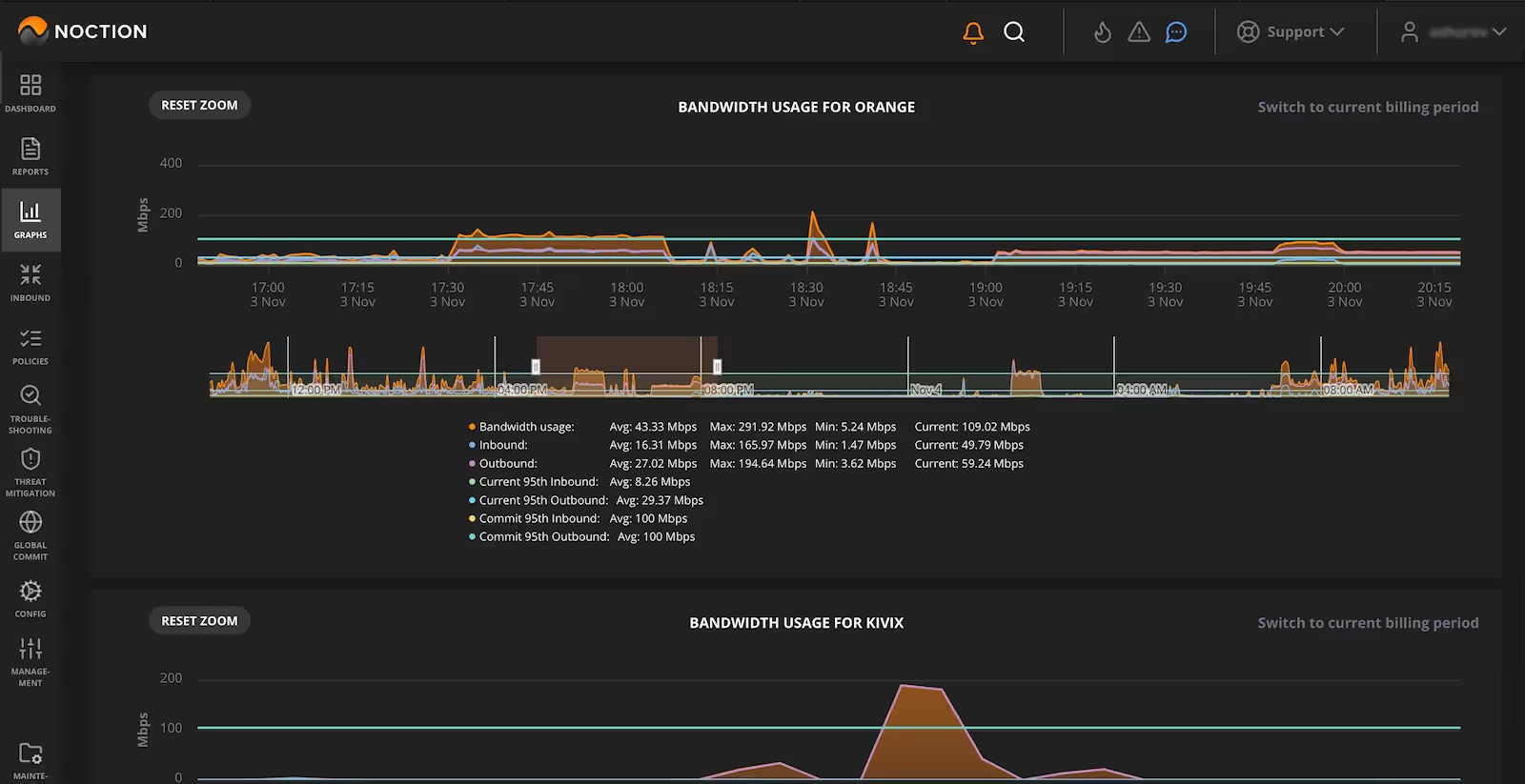
Control Bandwidth Costs
Balance network traffic and keep bandwidth levels below the preset thresholds for all your providers at all times. Noction IRP monitors bandwidth levels for both outbound and inbound routes and automatically adjusts traffic distribution to the shape you need.
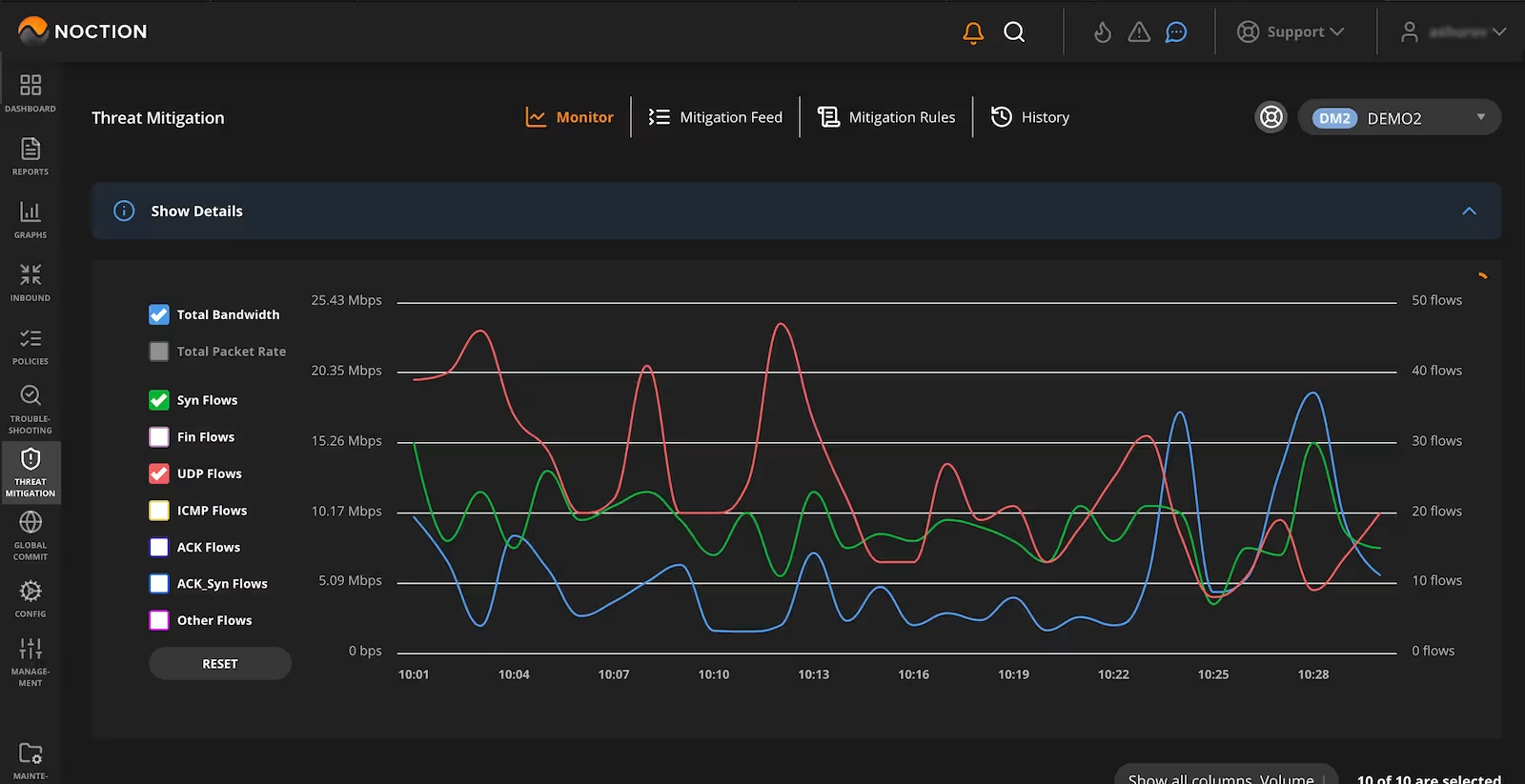
Mitigate DDoS Attacks
Take advantage of IRP’s Threat Mitigation features to detect, understand, and automatically neutralize DDoS attacks. By employing advanced methods like BGP Flowspec and BGP Blackholing, IRP ensures rapid response to malicious traffic, protecting your network from disruption and downtime.
What is Noction IRP and how does it work?
Noction IRP is a BGP network optimization platform for high availability and low latency, designed to dramatically improve your network performance.
When embedded in a network, IRP gets a complete or partial copy of the traffic from port mirroring or a Netflow/Sflow feed from the router (depending on the mode it was configured to operate). IRP then passively analyses traffic for specific network anomalies and actively measures relevant prefixes for packet loss, latency, and jitter. The platform gathers these metrics by issuing active probing through all available provider links. It sends this actively gathered data to the platform Core, which computes a performance or cost-improved routing policy for the network. The Noction IRP BGPd then announces the improved route to the networks’ edge routers via a typical BGP session.
IRP is non-intrusive and sits outside of the data path, so it doesn't impact network throughput or performance. If IRP gets turned off or fails, the routers will fall back to the standard BGP routes received from the providers. The platform can also operate in a BGP non-intrusive mode, where it only runs active probes, gathers data, and reports on potential improvements, without applying them.
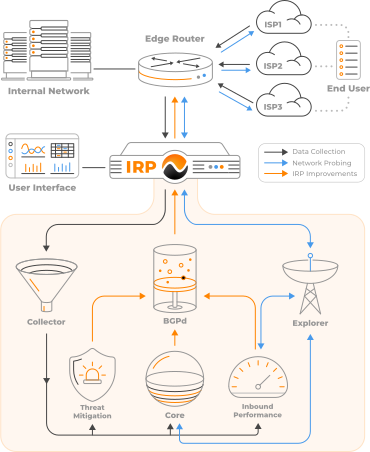
The Collector receives and processes all traffic passing through the network via port mirroring or NetFlow.
NetFlow data is analyzed by the Collector and forwarded to the Core for further processing.
The Core informs the Explorer about the prefixes that need to be probed.
The Explorer probes prefixes through each of the available providers.
The Explorer returns performance metrics such as latency and packet loss back to the Core.
Based on the performance data received from the Explorer, the Core calculates potential improvements and sends them to the BGP daemon.
The BGP daemon (BGPd) injects improvements into the router as regular BGP updates.
BGP – the protocol that runs the Internet
Border Gateway Protocol (BGP) is a distance-vector routing protocol used on the Internet. It allows information sent from one Internet point to another to find the right path and reach the recipient.
Protocol terminology:
When it comes to BGP, the first thing to explain is the concept of an Autonomous System (AS). An Autonomous System is a collection of routing points and the connections between them, united by a common interaction policy that allows this system to exchange data with nodes outside of the system.
An Autonomous System is characterized by a 16-bit or 32-bit Autonomous System Number (ASN) and a pool of IP addresses. Both are issued by IANA (Internet Assigned Numbers Authority), which delegates control over the distribution of ASNs and other Internet resources to regional registrars.
The connectivity of Autonomous Systems is achieved through static or dynamic routing.
Static routing is quite simple and requires an engineer to set the route to the nearest neighbor manually. In practice, however, connecting even 10 routers to each other becomes a real challenge.
Therefore, dynamic routing was invented for large networks, where devices automatically share information about the available routes with each other and adjust to any topology changes.
Dynamic routing protocols are classified according to the two main characteristics:
1) The way the protocol works in relation to the Autonomous Systems:
- IGP (Interior Gateway Protocol) – working inside the Autonomous System. These include: RIP, OSPF, EIGRP, IS-IS
- EGP (Exterior Gateway Protocol) – works outside of the Autonomous Systems and ensures their connectivity. This includes BGP
2) The protocol’s operation algorithm:
- Distance-Vector – knows the routes only to the nearest neighbors and exchanges a routing table with them. (RIP, EIGRP)
- Link State – knows the entire topology of the network and exchanges the topology table with its neighbors (OSPF, IS-IS)
Clearly, BGP can not be a Link State protocol. Just imagine how many Autonomous Systems are out there on the Internet! Any router will simply fail if it receives this great amount of information.
Thus, BGP is a distance-vector exterior gateway protocol that connects Autonomous Systems. A simplified scheme looks something like this:
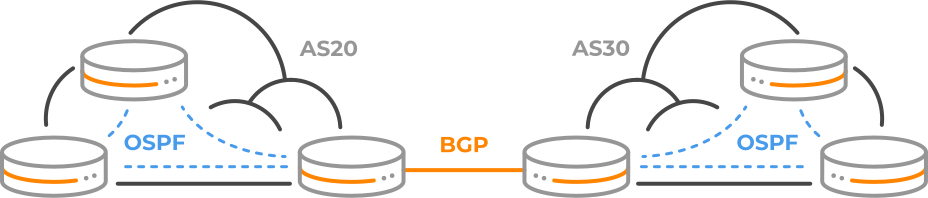
Since BGP is entrusted with the task of connecting Autonomous Systems throughout the Internet, it must be very reliable. Nevertheless, the protocol does not have a reliable transport method. Instead, it leverages TCPs reliability to ensure that the messages and updates are received. At the very beginning, the BGP router initiates the establishment of a TCP session on port 179 to its neighbor. The standard exchange of SYN and ACK takes place.
BGP connections must be carefully coordinated by the administrators of the Autonomous Systems willing to connect. If, for instance, the administrator of AS20 has initiated the BGP process on BR2 (Border Router), specifying BR1 and its ASN as a neighbor, but the AS30 administrator has not done anything, the TCP session will not be established and the systems will remain disconnected. Moreover, the following conditions must be met:
- port 179 is not blocked by the ACL (Access Control List)
- routers can ping each other
- the ASN of the distant Autonomous System was specified correctly
- RouterIDs do not match
If the TCP session is established successfully, the BGP routers start exchanging OPEN messages, reporting their ASN, RouterID, and Hold time. The Hold timer is the time during which the TCP session will be supported. In case the conditions listed above are not met, for example, if the information about the AS number does not match, then the router receiving the incorrect ASN will notify its neighbor by sending a NOTIFICATION message and will end the TCP session.
If all the conditions are met, the routers start sending each other KEEPALIVE messages with a specific interval, meaning they confirm the parameters accepted in OPEN and send the notification “I’m still alive”.
Finally, the routers can begin to exchange routing information using the UPDATE message.
The structure of this message consists of the following parts:
- Unfeasible routes length indicates the length of the Withdrawn Routes field
- Withdrawn routes contain IP address prefixes for the routes being withdrawn
- Total path attribute length indicates the length of the path attributes field
- Path attributes contain the properties of the routes: the path origin, preference for the route, the multi-exit discriminator (MED), as well as the information about confederations, communities, aggregation, and route reflection.
- NRLI (Network Layer Reachability Information) contains information about the networks to be added to the routing table – the IP address of the network and its mask.
The UPDATE message is transmitted each time one of the routers receives information about the new networks, while the KEEPALIVE message is transmitted throughout the entire TCP session.
NOTIFICATION message is sent when an error is detected. The BGP connection closes immediately after the message is sent. Such a message includes the error code, its subcode, and also data related to the error.
BGP is most certainly the most complex IP routing protocol currently deployed on the Internet. The information above provides only a basic understanding of how the protocol works. For more in-depth information, please consult our blog or the Resource Center guides.
Learn more about IRP
Noction IRP Resources
See what others have to say
Noction is loved by Network Pros

"Optimal performance for our customers"
IRP has been a great asset to our business. It is paying for itself by saving us money on overages and ...
"Optimization & Scalability"
Noction gave us the three requirements we seek with all solutions: optimization, scalability, and extended SLA.